The AHOJG Criteria
The rules that govern every coffeeshop in the Netherlands
Understanding Dutch Coffeeshop Regulations
Cannabis is technically illegal in the Netherlands under the Opium Act. However, the Dutch government operates a tolerance policy, known as the gedoogbeleid, which allows licensed coffeeshops to sell small quantities of cannabis without prosecution. This policy has been in place since the 1970s, when the government decided that separating the soft drug market from the hard drug market would benefit public health.
The tolerance policy is not a free-for-all. Every coffeeshop in the Netherlands must comply with a strict set of rules known as the AHOJG criteria. These criteria were established by the Public Prosecution Service (Openbaar Ministerie) and were first formally included in the Opium Act guidelines in 1991. In 2013, an additional criterion was added, the I-criterion (ingezetenencriterium), making the full set AHOJGI. These rules determine whether a coffeeshop is tolerated or faces enforcement action, including fines, temporary closure, or permanent shutdown.
Each letter in AHOJG represents a specific condition. If a coffeeshop violates even one of these criteria, the local municipality and Public Prosecution Service can take immediate action. Below, we explain each criterion in detail.
A, Affichering (No Advertising)
The A in AHOJG stands for Affichering, which translates to posting or displaying advertisements. Coffeeshops are prohibited from advertising their products or their establishment in any form. This includes billboards, flyers, posters, newspaper ads, online advertisements, social media promotions, and any other marketing activity that promotes the sale of cannabis.
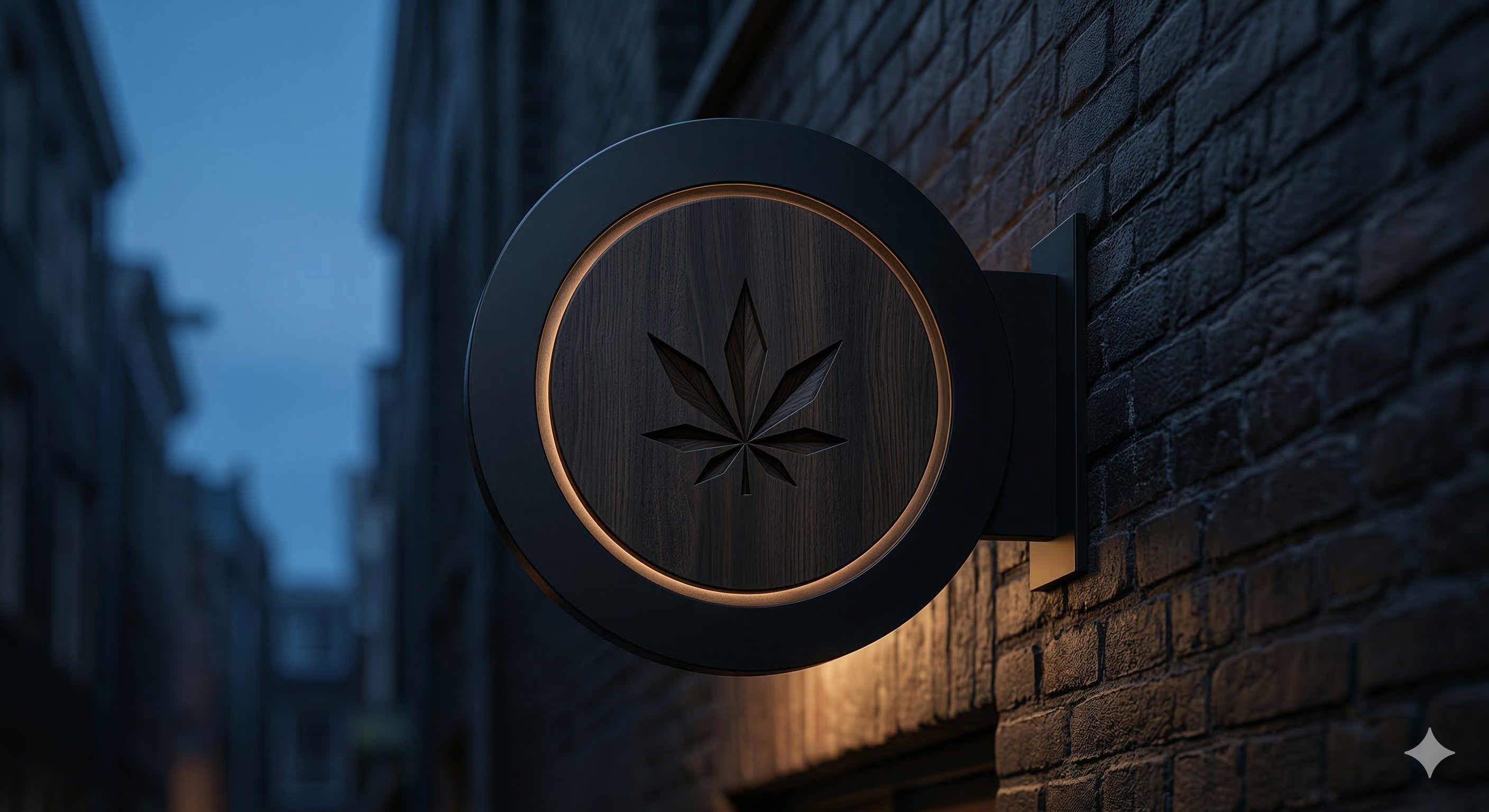
The only exception is a small, discreet indication on the facade of the coffeeshop itself. This is typically a simple sign with the shop name, and sometimes a stylized cannabis leaf or Rastafari-inspired color scheme. Many coffeeshops use green, yellow, and red Ethiopian flags or palm leaf imagery as indirect identifiers, since direct cannabis advertising is not permitted.
This criterion is why you will never see a Dutch coffeeshop running a television commercial, distributing coupons, or sponsoring events. It is also why platforms like cannabizzz.nl can exist independently, as we are a third-party information platform publishing factual data, not an advertising channel operated by or on behalf of any coffeeshop.
H, Harddrugs (No Hard Drugs)
The H stands for Harddrugs, meaning hard drugs. Coffeeshops must operate in a strictly segregated market. They are only permitted to sell cannabis products, which are classified as soft drugs under Dutch law. The sale, possession, or presence of any hard drugs on the premises is absolutely prohibited.
Hard drugs under Dutch law include cocaine, heroin, ecstasy (MDMA), amphetamines, methamphetamine, LSD, and GHB, among others. The Opium Act distinguishes between List I substances (hard drugs, carrying severe penalties) and List II substances (soft drugs, including cannabis and hashish, carrying lighter penalties under the tolerance policy).
If hard drugs are found on the premises of a coffeeshop, even in small quantities, the consequences are severe. The coffeeshop will face immediate closure, typically for a minimum of six months to a year, and possibly permanently. The operator may also face criminal prosecution. This strict separation is the foundation of Dutch drug policy, designed to prevent cannabis users from being exposed to more dangerous substances.
O, Overlast (No Nuisance)
The O stands for Overlast, which means nuisance or disturbance. Coffeeshops must not cause any form of public nuisance in their neighborhood. This includes noise disturbances, parking problems, litter, loitering, odor complaints, and any behavior by customers that negatively affects the surrounding area.
Municipalities take nuisance complaints very seriously. If residents or businesses near a coffeeshop file repeated complaints about noise, double-parking, groups of people hanging around outside, or other disturbances, the municipality can issue warnings and ultimately close the coffeeshop. Many municipalities have specific nuisance protocols that define exactly what constitutes a violation and how quickly enforcement escalates.
In practice, this means coffeeshop operators must actively manage their clientele. Many coffeeshops have security personnel at the door, clearly posted house rules, and designated smoking areas. Some municipalities require coffeeshops to have a nuisance management plan as part of their operating permit. The goal is to ensure that coffeeshops are quiet, well-managed businesses that do not disrupt the daily life of their neighbors.
J, Jeugdigen (No Minors)
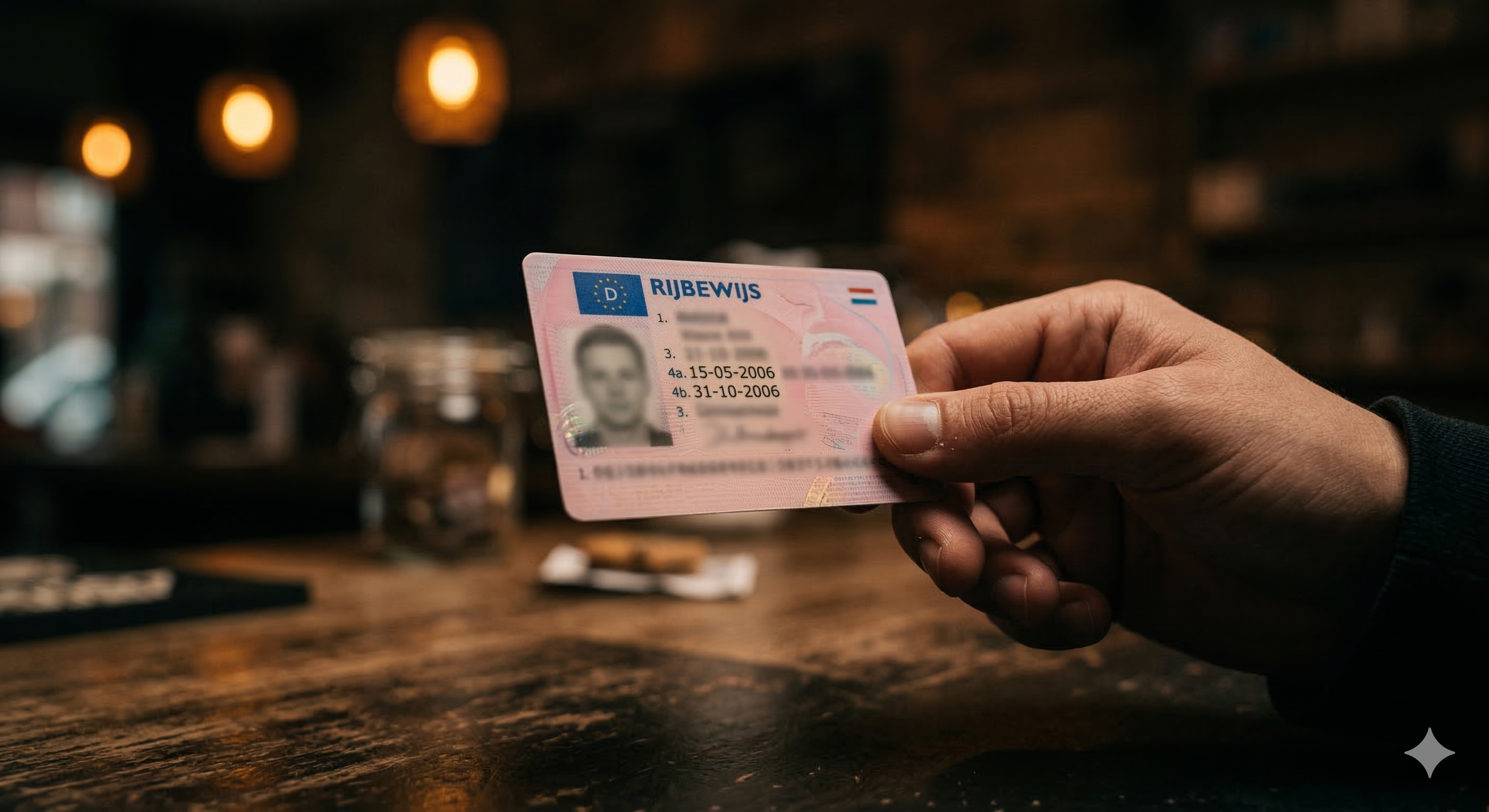
The J stands for Jeugdigen, which means young people or minors. Coffeeshops are strictly prohibited from admitting or selling to anyone under the age of 18. This is one of the most actively enforced criteria, and violations carry some of the heaviest penalties.
Every coffeeshop is required to verify the age of every customer before entry. This means checking a valid identity document, such as a passport, Dutch ID card (identiteitskaart), or EU driving license. If a customer cannot prove they are 18 or older, they must be refused entry. There are no exceptions.
Municipalities and police regularly conduct undercover checks using mystery shoppers who appear to be young. If a coffeeshop is caught selling to a minor or allowing a minor to enter, the penalties are immediate and harsh. A first offense typically results in a closure of three to six months. Repeat offenses can lead to permanent closure and criminal charges against the operator.
The strict enforcement of the age requirement reflects the Dutch concern about cannabis use among young people. Research has shown that cannabis can have negative effects on the developing brain, and Dutch policy is explicitly designed to keep cannabis out of the hands of minors while allowing regulated access for adults.
G, Grote Hoeveelheden (No Large Quantities)
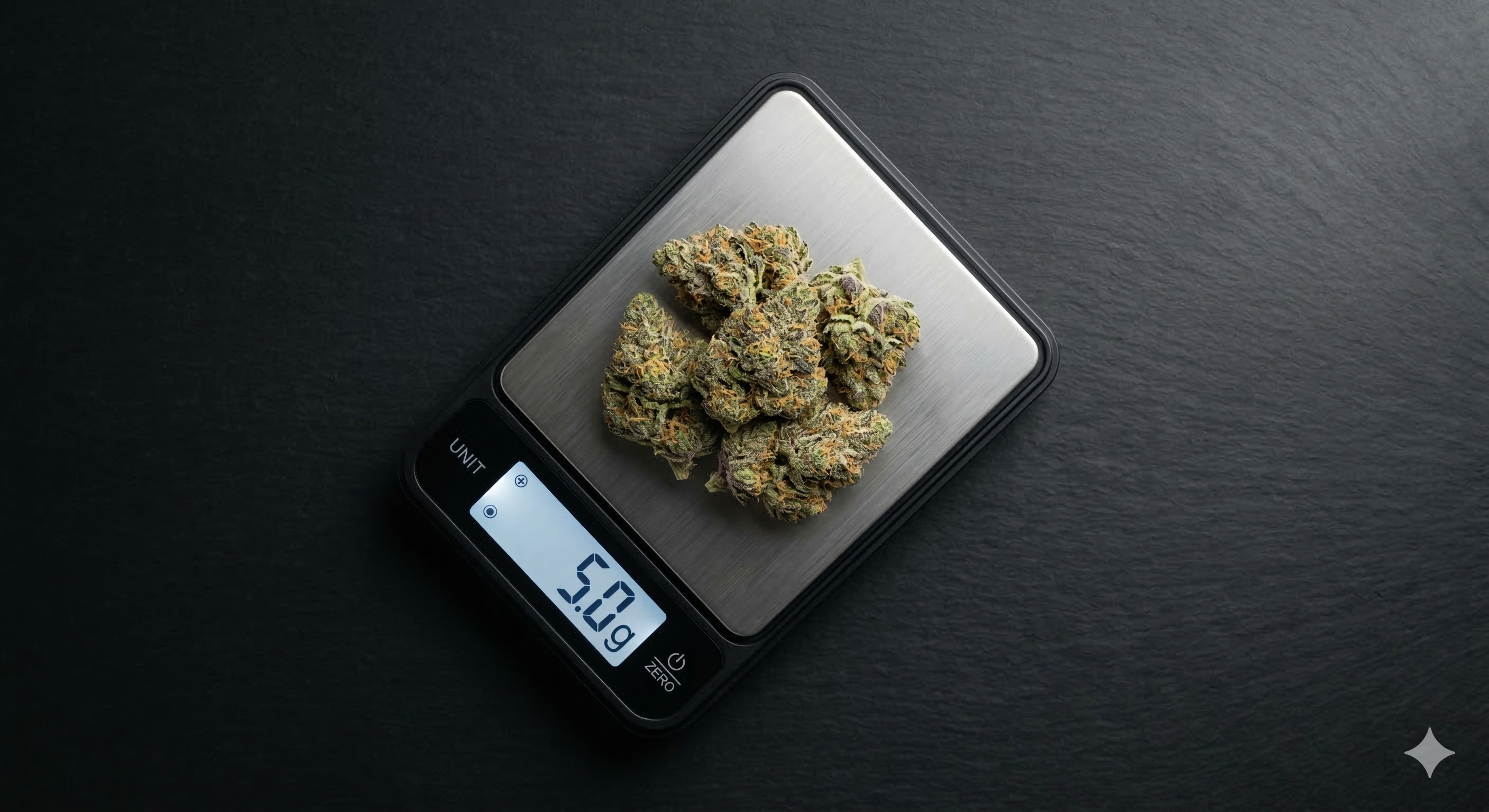
The G stands for Grote hoeveelheden, meaning large quantities. Coffeeshops are limited in both how much they can sell per transaction and how much they can keep in stock.
The transaction limit is 5 grams per person per day. A coffeeshop cannot sell more than 5 grams of cannabis (whether weed, hashish, or a combination) to a single customer in one visit. This limit applies per day, not per transaction, meaning a customer cannot simply visit the same coffeeshop twice in one day to purchase 10 grams.
The stock limit is 500 grams. A coffeeshop may not have more than 500 grams of cannabis on the premises at any time. This creates a practical challenge for busy coffeeshops, particularly in tourist-heavy areas like Amsterdam, where daily turnover can be very high. The 500-gram stock limit is widely regarded as one of the most problematic aspects of the tolerance policy, as it forces coffeeshops to restock frequently from the unregulated supply chain.
Exceeding either the 5-gram sales limit or the 500-gram stock limit is considered a serious violation. Police and municipal inspectors conduct regular checks, sometimes unannounced, to verify compliance. Violations can result in closure, fines, and criminal prosecution.
The I-Criterion (Residents Only)
In 2013, the Dutch government added a sixth criterion to the AHOJG framework, the I-criterion, which stands for Ingezetenencriterium (residents criterion). Under this rule, coffeeshops are only permitted to admit and sell to residents of the Netherlands. A resident is defined as someone who lives in a Dutch municipality and is registered in the municipal personal records database (Basisregistratie Personen, or BRP).
The I-criterion was introduced primarily to combat drug tourism in border regions. Cities like Maastricht, Breda, Bergen op Zoom, Roosendaal, and Terneuzen experienced significant problems with visitors from Belgium, France, and Germany crossing the border specifically to purchase cannabis. This led to traffic congestion, parking problems, public nuisance, and street dealing around coffeeshops.
Enforcement of the I-criterion varies significantly across the Netherlands. In the southern border regions, it is actively enforced. Coffeeshops in Maastricht, for example, only sell to Dutch residents, and customers must present a valid ID along with proof of Dutch residency (such as a BRP extract). In most other cities, including Amsterdam, Rotterdam, The Hague, and Utrecht, the I-criterion is not actively enforced, and tourists are welcome at coffeeshops.
On cannabizzz.nl, we clearly indicate which cities enforce the I-criterion with a "Locals Only" label. Currently, the cities that restrict access to Dutch residents include Maastricht, Breda, Heerlen, Sittard, Geleen, Terneuzen, and Dordrecht. If you are visiting the Netherlands as a tourist, you can freely visit coffeeshops in the vast majority of cities, but it is always wise to check before you travel.
Additional Rules
Beyond the AHOJG criteria and the I-criterion, coffeeshops must also comply with several additional regulations. Alcoholic beverages are strictly prohibited. A coffeeshop cannot serve, sell, or allow the consumption of alcohol on its premises. This is sometimes referred to as the "plus criterion." If alcohol is found to be sold or consumed in a coffeeshop, it faces the same enforcement actions as any other criteria violation.
Coffeeshops are also prohibited from selling cannabis online or delivering cannabis to customers. All sales must take place in person, at the licensed premises. This means there are no legal cannabis delivery services in the Netherlands, and any website offering to deliver cannabis to your door is operating illegally.
Each municipality in the Netherlands decides independently whether to allow coffeeshops within its borders, and if so, how many. Of the approximately 342 municipalities in the Netherlands, only about 103 have coffeeshops. Many municipalities, particularly smaller and more rural ones, have chosen not to permit coffeeshops at all. Municipalities can also impose additional local requirements, such as minimum distances from schools, maximum operating hours, or specific location restrictions.
How Enforcement Works
Enforcement of the AHOJG criteria is a shared responsibility between the municipality, the police, and the Public Prosecution Service. Inspections can be announced or unannounced, and they typically involve checking stock quantities, verifying age checks at the door, looking for hard drugs, and assessing nuisance complaints.
Most municipalities operate a graduated enforcement model. A first violation might result in a warning or a short closure (typically one to three months). A second violation leads to a longer closure (three to six months). A third violation often results in permanent closure of the coffeeshop. For the most serious violations, such as selling to minors or the presence of hard drugs, there is usually no warning, and immediate closure is the standard response.
Coffeeshop operators can also be subject to Bibob screening, a probity check that allows municipalities to refuse or revoke permits if there are grounds to suspect that criminal activity is involved in the business. This screening looks at the financial background of the operator, potential links to organized crime, and the source of investment capital.
What This Means for Visitors
If you are visiting the Netherlands and plan to visit a coffeeshop, the AHOJG criteria affect you in several practical ways. You will always be asked to show a valid ID to prove you are 18 or older. You can purchase a maximum of 5 grams per coffeeshop per day. In most cities, tourists are welcome, but in some border cities, only Dutch residents can enter. Coffeeshops do not sell alcohol, and you cannot order cannabis online or have it delivered.
The rules are designed to create a safe, controlled environment for cannabis consumption. Despite being technically illegal, the Dutch coffeeshop system has operated successfully for decades, providing adults with regulated access to cannabis while keeping it separated from hard drugs and away from minors.
You can find all 580+ coffeeshops across 106 cities in the Netherlands on cannabizzz. Browse by city, check opening hours, explore menus, and read reviews before your visit.
Explore coffeeshops by city →