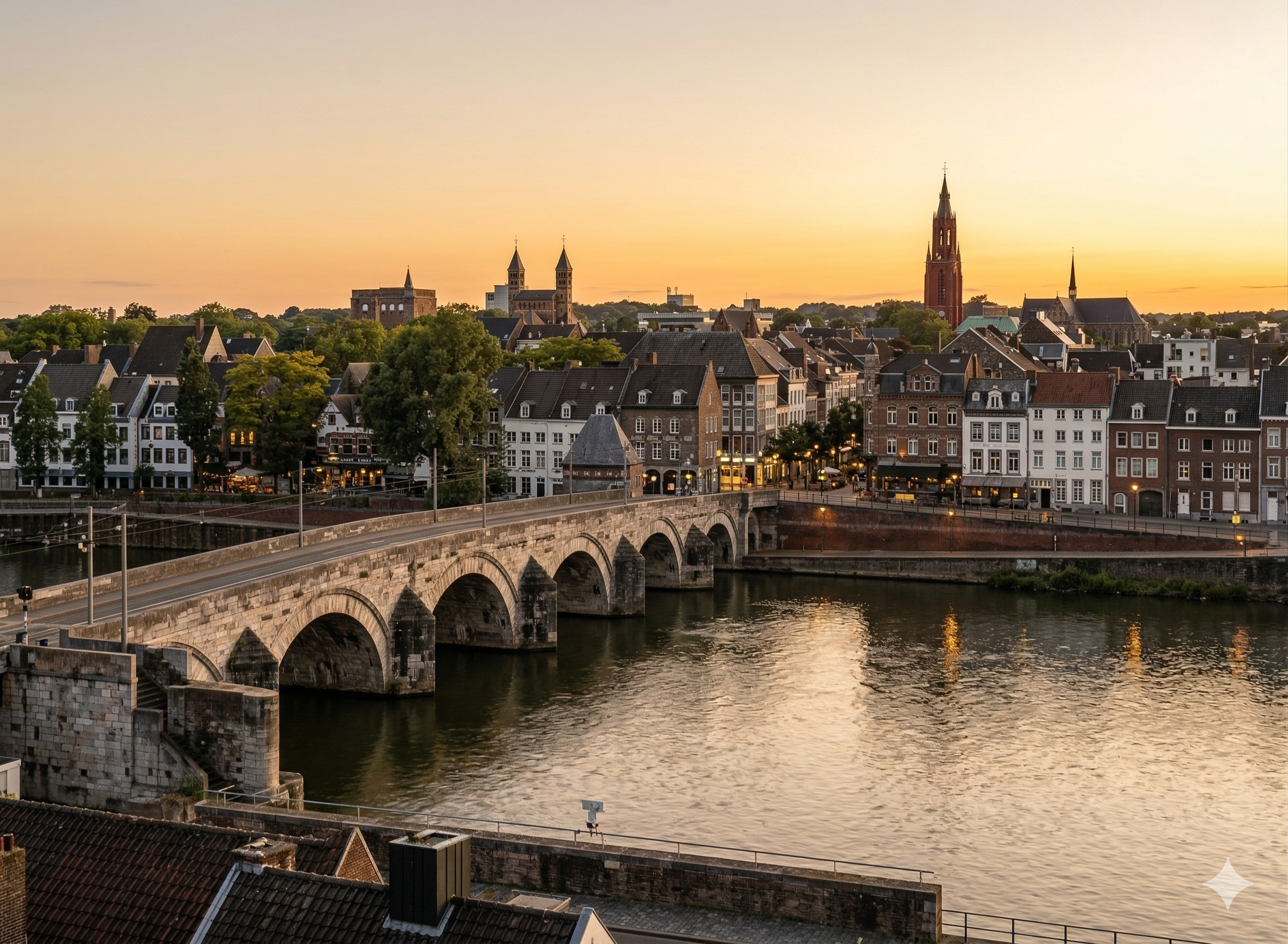
Maastricht, one of the 10 municipalities participating in the Dutch wietexperiment, has launched an external review of its entire coffeeshop policy. Mayor Wim Hillenaar (CDA) says the current rules need to be brought up to date, with the review covering the scarce permit system, the transferability of licenses, and the maximum number of coffeeshops allowed in the city.
The review is being conducted by external researchers rather than the municipality itself. Mayor Hillenaar told local news platform De Nieuwe Ster Maastricht: "The research will examine a scarce licensing system, the transferability of permits, and the maximum number of shops. Based on the results, we will determine whether the current licensing system and policy framework need to be revised." Results are expected by the end of 2026.
'We Have Become a Normal Business'
The most significant development in Maastricht is not the policy review itself, but the assessment from the people running coffeeshops within the regulated system. Marc Josemans, owner of coffeeshop Easy Going and one of the most prominent coffeeshop operators in the Netherlands, says the wietexperiment is running to "full satisfaction."
His description of the current situation is striking: "There is no backdoor anymore. We buy legally, justice watches along. We can handle everything through the bank. We have actually become a normal business."

The Backdoor Problem, Solved
For decades, the "backdoor problem" was the defining contradiction of Dutch cannabis policy. Coffeeshops were legally allowed to sell small quantities of cannabis to customers through the front door, but every gram they sold arrived through the back door via illegal channels. Production, wholesale supply, and transportation of cannabis remained criminal activities, meaning legitimate coffeeshop owners were forced to do business with criminal networks.
The wietexperiment was designed specifically to close this gap. Ten licensed producers now grow cannabis under government oversight and supply it to the 72 coffeeshops in the 10 participating municipalities. Josemans' statement that coffeeshops can now "handle everything through the bank" reflects a fundamental shift. For the first time, coffeeshop operators can run their businesses entirely within the legal system, from procurement to payment processing.
Early Growing Pains, Now Resolved
Josemans acknowledged that the experiment did not start smoothly. "In the beginning there were problems with the supply of legal cannabis, but the offering is getting better and better," he said. This mirrors reports from other participating cities, where the transition from illegal to legal supply required time for licensed producers to scale up their operations and expand their product range.
The fact that a veteran coffeeshop operator in one of the Netherlands' most complex cannabis markets now describes the system as running to "full satisfaction" is a significant milestone for the experiment.
Maastricht's Unique Position
Maastricht occupies a unique position in the Dutch coffeeshop landscape. Located in the far south of the Netherlands, directly bordering Belgium and Germany, the city experienced massive cannabis tourism for years. Thousands of foreign visitors crossed the border daily to buy cannabis, creating significant public order problems in the city center.
In response, Maastricht was one of the first cities to implement the I-criterium (ingezetenencriterium), which restricts coffeeshop access to Dutch residents only. Foreign tourists cannot buy cannabis in Maastricht's coffeeshops. This policy dramatically reduced cannabis tourism but also eliminated the original rationale for relocating coffeeshops to the edges of the city, which is why the well-known coffeeshop boats Mississippi and Smoky remain at their current location on the Maasboulevard.
A Pattern Emerging
Maastricht is the second wietexperiment city to announce a coffeeshop policy review in recent weeks. Groningen announced plans to expand from 7 to 10 coffeeshops with a new quality-based licensing system. Dutch parliament voted with a nearly three-quarter majority to continue the experiment. Germany just published its two-year EKOCAN evaluation showing crime down 80% and no increase in youth use.
The pattern is clear. Participating cities are not pulling back from the regulated model. They are modernizing their frameworks to make it work better. When coffeeshop owners describe themselves as "a normal business," the experiment is delivering exactly what it was designed to achieve.