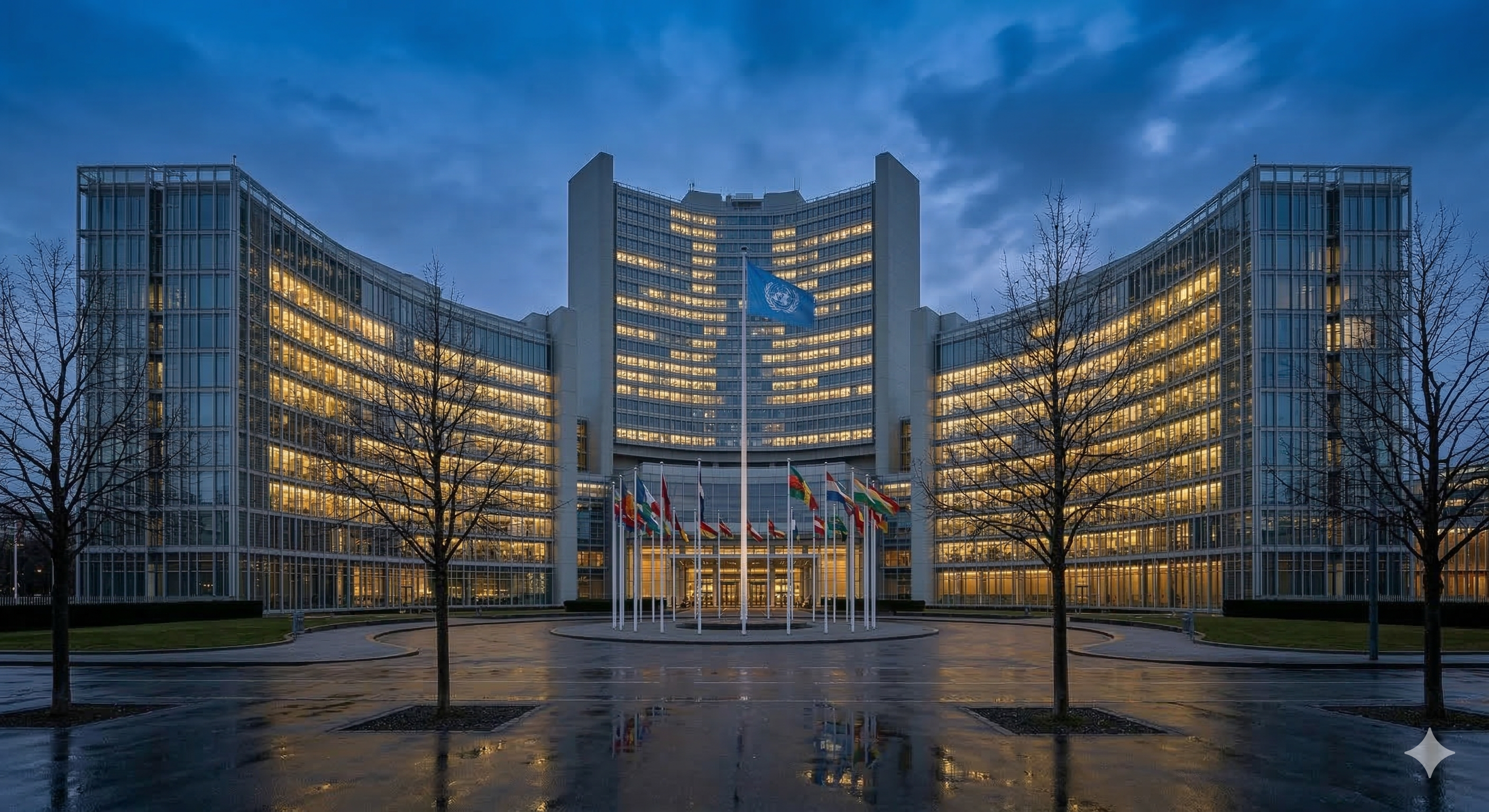
On March 12, 2026, a traveling exhibition about the remarkable history of cannabis tolerance in the Netherlands and France opened for the first time in Vienna, right outside the United Nations Vienna International Centre during the annual session of the Commission on Narcotic Drugs (CND). The exhibition marks a significant anniversary: it has been exactly 50 years since the Dutch Opium Act was fundamentally reformed in 1976, giving birth to the tolerance policy that would eventually make the Netherlands famous for its coffeeshop culture.
The project, titled "1976-2026: The French/Dutch Paradox in the Global Drug War," was developed by the Dutch foundation Verbond voor Opheffing van het Cannabisverbod (VOC) and the European coalition for just and effective drug policy (Encod). It takes the 50th anniversary of two parallel but completely different approaches to cannabis as its starting point.
Two Countries, Two Paths
In 1976, two things happened almost simultaneously. In the Netherlands, the government revised the Opium Act to formally distinguish between hard drugs and soft drugs, creating the legal foundation for what would become the gedoogbeleid, the tolerance policy. This separation allowed licensed coffeeshops to sell small quantities of cannabis without prosecution, as long as they followed strict rules. Today, more than 500 coffeeshops operate across 106 cities in the Netherlands under this framework.
That same year in France, a group of prominent intellectuals published an open letter in the newspaper Liberation calling for the complete decriminalization of cannabis. France took the opposite path. Instead of tolerating cannabis, the country maintained some of the strictest drug laws in Western Europe, with cannabis possession remaining a criminal offense carrying potential prison sentences well into the 21st century.
The exhibition explores how these two neighboring EU member states, separated by just a few hundred kilometers, developed fundamentally different responses to the same question. The result is a striking visual narrative that documents 50 years of policy divergence, showing how the Netherlands moved toward regulated tolerance while France held firm on prohibition.
What the Exhibition Includes
The exhibition features historical documents, photographs, and policy timelines from both countries. One of its most notable elements is a living cannabis plant displayed in a cage, a symbolic piece that represents the contradictions inherent in drug policy. There is also a section dedicated to Joep Oomen (1961-2016), a cannabis activist and co-founder of both Encod and the VOC foundation, whose work helped shape European drug policy advocacy for decades.
Informational pamphlets are available with translations of the exhibition texts in five languages, along with a 24-page exhibition guide with supplementary information and visual material. Board members of Encod and VOC chairman Derrick Bergman were present in Vienna to engage with UN delegates, visitors, and journalists.
A Tour Across Europe
After its debut in Vienna, the exhibition is scheduled to travel to nine cities across seven countries. The confirmed stops include Bilbao, Berlin, Paris, Brussels (at or near the European Parliament), Prague, Amsterdam, The Hague (at or near the Dutch Parliament), and Eindhoven. This makes it one of the most ambitious cannabis policy exhibitions ever organized in Europe, bringing the conversation about drug reform directly to the institutions and cities where policy decisions are made.
The choice of cities is deliberate. Berlin is the capital of the country that legalized recreational cannabis in 2024. Prague is where the Czech Republic introduced one of Europe's most progressive cannabis frameworks on January 1, 2026. Brussels houses the European institutions that increasingly influence national drug policies. And Amsterdam, The Hague, and Eindhoven represent the heart of the Dutch coffeeshop system that the exhibition documents.
Why This Matters in 2026
The timing of the exhibition is significant. Europe is in the middle of its most active period of cannabis policy reform in decades. Germany legalized recreational cannabis and now has nearly 400 approved cultivation clubs. The Czech Republic allows personal possession and home growing. The Netherlands is running its Controlled Cannabis Supply Chain Experiment across 10 municipalities. France is transitioning its medical cannabis pilot to a permanent pharmaceutical framework on April 1. Luxembourg, Malta, and Switzerland have all introduced various forms of legal access.
At the same time, the Amsterdam municipal elections taking place on March 18 could result in a new push to ban tourists from coffeeshops in the city center, a development that would represent a significant shift in the accessibility of the Dutch system that has operated for five decades.
The exhibition serves as a reminder that today's policy landscape did not emerge overnight. The Dutch tolerance policy was the product of deliberate political choices made in 1976, choices that were controversial at the time and remain debated today. By placing the Dutch and French approaches side by side, the exhibition invites visitors to consider what works, what does not, and what the next 50 years of cannabis policy might look like.
What This Means for Visitors
If you are visiting the Netherlands, the coffeeshop system that grew out of the 1976 reforms is still very much alive and accessible. With over 541 coffeeshops across 106 cities, the Netherlands remains the most accessible destination in Europe for legal cannabis purchases as a tourist. You can explore all of them, check opening hours, browse menus, and read reviews on cannabizzz.
The exhibition itself will be worth visiting when it arrives in the Netherlands later this year. Dates and locations for the Amsterdam, The Hague, and Eindhoven stops will be announced by the VOC and Encod organizations. Follow our news section for updates as they are confirmed.