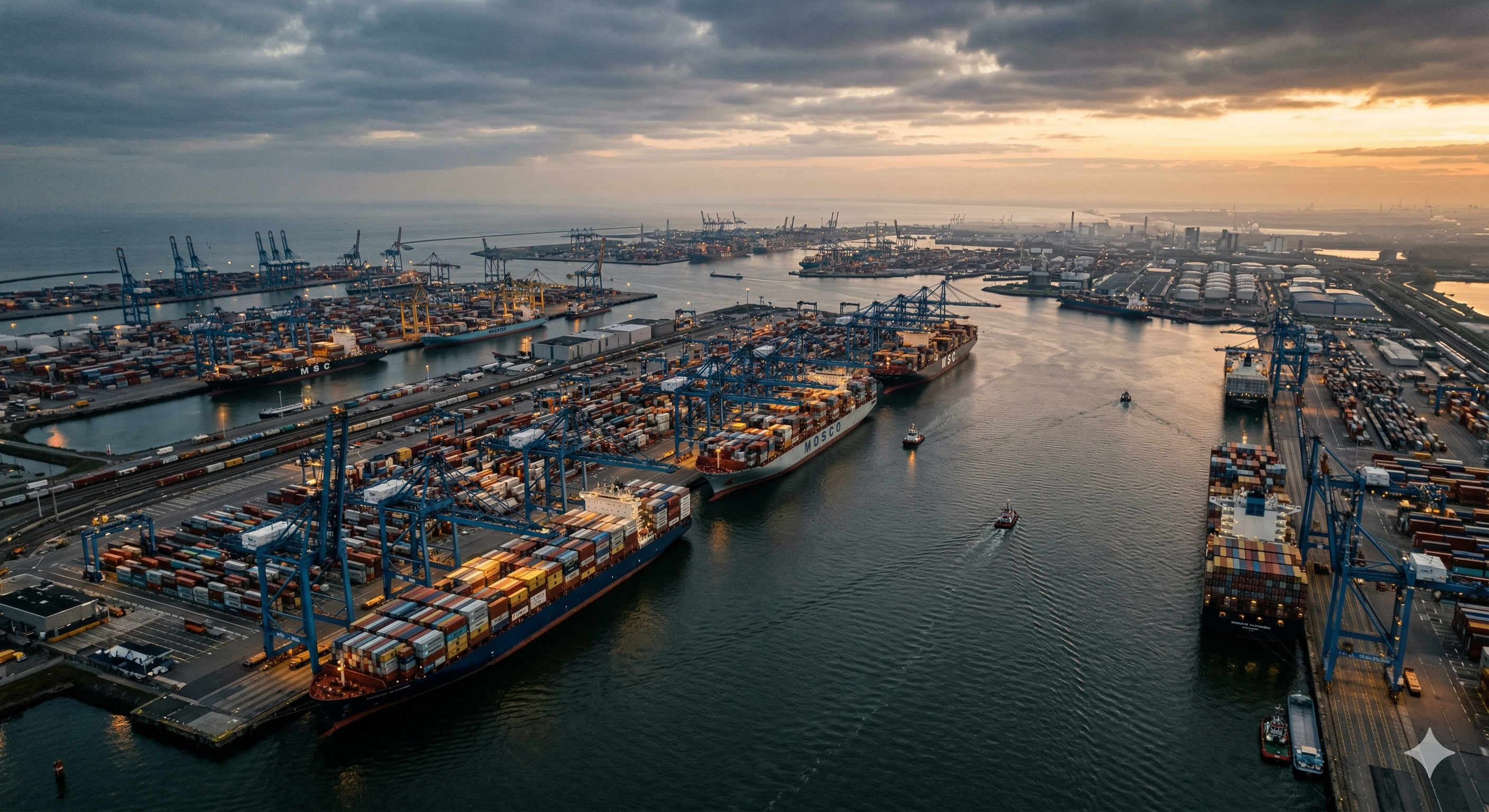
Cannabis seizures at the Port of Rotterdam surged from 14,492 kilograms in 2024 to 65,532 kilograms in 2025, a 350% increase that has caught Dutch customs officials off guard. At the same time, cocaine seizures at the port dropped from 38,000 kilograms to 24,500 kilograms. For the first time, cannabis is rivaling cocaine as the most trafficked drug through Europe's largest seaport.
The shift was first reported by Dutch newspaper Algemeen Dagblad, which cited criminal sources and investigators describing a fundamental change in the economics of drug trafficking. With cocaine wholesale prices halving over the past 18 months, from roughly 28,000 euros per kilogram to 14,000 euros, criminal networks have turned to cannabis as a lower-risk, nearly as profitable alternative.
The primary source of this flood is Canada. Since legalizing recreational cannabis in 2018, Canada has built enormous production capacity that far exceeds domestic demand. The country's legal cannabis industry, now worth approximately 3 billion euros annually, produces hundreds of tonnes more than it can sell at home. While exports are officially banned and surplus stock is supposed to be destroyed, Dutch investigators say that rule is not always followed.
The Economics of Cannabis Trafficking
The profit margins are striking. Canadian cannabis can be purchased for between 800 and 1,200 euros per kilogram and sold in Europe for around 4,000 euros. Traffickers shipping to the United Kingdom or Turkey can earn double that. Compared to cocaine, the penalties for cannabis trafficking are far lighter, making it a significantly lower-risk operation for criminal networks.
Peter van Buijtenen, the regional director of customs in Rotterdam, described the surprise among officials. Dutch customs had long focused on cocaine interdiction, not cannabis. The Netherlands has historically been a major cannabis producer itself, making large-scale imports unexpected. Yet shipping containers from Canada began arriving packed with thousands of kilograms of cannabis, with individual seizures reaching 4,600, 5,800, and 6,900 kilograms each.
Canada Fights Back
The trafficking is not going unnoticed on the Canadian side. In January and February 2026 alone, the Canada Border Services Agency (CBSA) seized over 1,066 kilograms of cannabis at Toronto-area airports and shipping facilities. Shipments were intercepted bound for the United Kingdom, Germany, and the Netherlands.
In one case, 224 kilograms of cannabis were found in a commercial shipment headed for Germany. In another, 72 kilograms were seized from a single passenger at Toronto Pearson International Airport bound for the UK. Canadian authorities reported seizing over 46,608 kilograms of illegal cannabis in 2025, underscoring the scale of the problem at both ends of the supply chain.
The trafficking route has existed for nearly a decade, according to sources cited by Dutch media, but expanded rapidly after Canada's 2018 legalization created a massive oversupply. Cannabis from Thailand and the United States has also been intercepted at Rotterdam, though Canadian shipments dominate the seized volumes.
Why This Matters for the Netherlands
The surge in cannabis trafficking highlights a paradox at the heart of Dutch drug policy. The Netherlands has tolerated cannabis sales through coffeeshops for decades, but production and large-scale supply have remained illegal. This "backdoor problem," where the front door of the coffeeshop is legal but the back door where cannabis enters is not, has long been criticized as effectively subsidizing organized crime.
The Dutch wietexperiment, the Controlled Cannabis Supply Chain Experiment running in 10 municipalities, is specifically designed to close this gap. By licensing legal producers to supply coffeeshops with regulated, quality-controlled cannabis, the experiment aims to prove that a legal supply chain can replace criminal networks. The program's experimental phase officially launched in April 2025, with 10 licensed growers now supplying all 72 coffeeshops in participating cities.
The Rotterdam trafficking numbers make the case for the wietexperiment more urgent than ever. When legal supply chains do not exist, criminal networks fill the vacuum, and the scale at which they operate is growing rapidly. Whether the Dutch government will expand the experiment to cover the entire country remains a political question, with the first meaningful assessment of results expected in mid-2026.
For now, the numbers speak for themselves. A 350% increase in cannabis seizures at Europe's largest port, driven by oversupply from a legal market 5,000 kilometers away, is a clear signal that the current system of tolerated sales without legal production is no longer sustainable.