Less than two years after Germany legalized recreational cannabis, the country's cannabis club model is growing at a remarkable pace. According to the latest data from the Federal Association of Cannabis Cultivation Associations (BCAv), 397 cultivation association applications have been approved out of 836 submitted nationwide. That is a jump from 368 approvals reported in December 2025, showing that the system is accelerating rather than slowing down.
For anyone watching the European cannabis landscape, this matters. Germany is the largest economy in the EU, and its legalization model is being closely watched by lawmakers across the continent. Here is everything you need to know about what is happening, how the club system works, and what comes next.
What Are Cannabis Cultivation Associations?
Cannabis cultivation associations, sometimes called cannabis social clubs, are non-profit organizations where adult members collectively grow and distribute cannabis for personal use. They are not commercial dispensaries or coffeeshops. There are no storefronts, no retail sales to the public, and no branding or advertising allowed.
Germany legalized these associations on July 1, 2024, as part of the Cannabis Act (CanG) that took effect in April 2024. The model was inspired by similar structures in Malta and Spain, though Germany's version is more tightly regulated than either.
The key rules are straightforward: each club can have a maximum of 500 members, members must be German residents who have lived in the country for at least six months, and each member can receive up to 25 grams per day or 50 grams per month. For members aged 18 to 21, the limit is 30 grams per month with a maximum of 10% THC. Members cannot belong to more than one club at a time.
The Numbers: 397 Approved and Growing
The BCAv's March 2026 data shows a clear upward trend. In December 2025, 368 of 806 applications had been approved. Three months later, the total has risen to 397 out of 836. That is an approval rate of roughly 47%, meaning almost half of all applications submitted have been given the green light.
The German Cannabis Business Association (BvCW) recently surveyed industry professionals about their expectations. Most respondents predicted between 400 and 600 active associations by the end of 2026, with a consensus around 500. Some optimistic estimates went as high as 1,000 or even 2,000.
The growth is not evenly distributed across the country. States like North Rhine-Westphalia, Bavaria, and Berlin have seen the most applications, reflecting their larger populations and more established cannabis communities. Processing times vary significantly between states, with some federal authorities moving faster than others.
How It Works in Practice
If you are a German resident and want to join a cannabis club, the process typically involves finding a licensed club in your area, attending an information session, submitting an application with proof of residency and identity, and paying a membership fee. Since the clubs are non-profit, fees are meant to cover cultivation costs only.
Once you are a member, you can collect your cannabis allocation at the club. However, unlike Spanish cannabis clubs, German associations do not have consumption areas. You pick up your cannabis and consume it elsewhere, within the legal limits for public consumption.
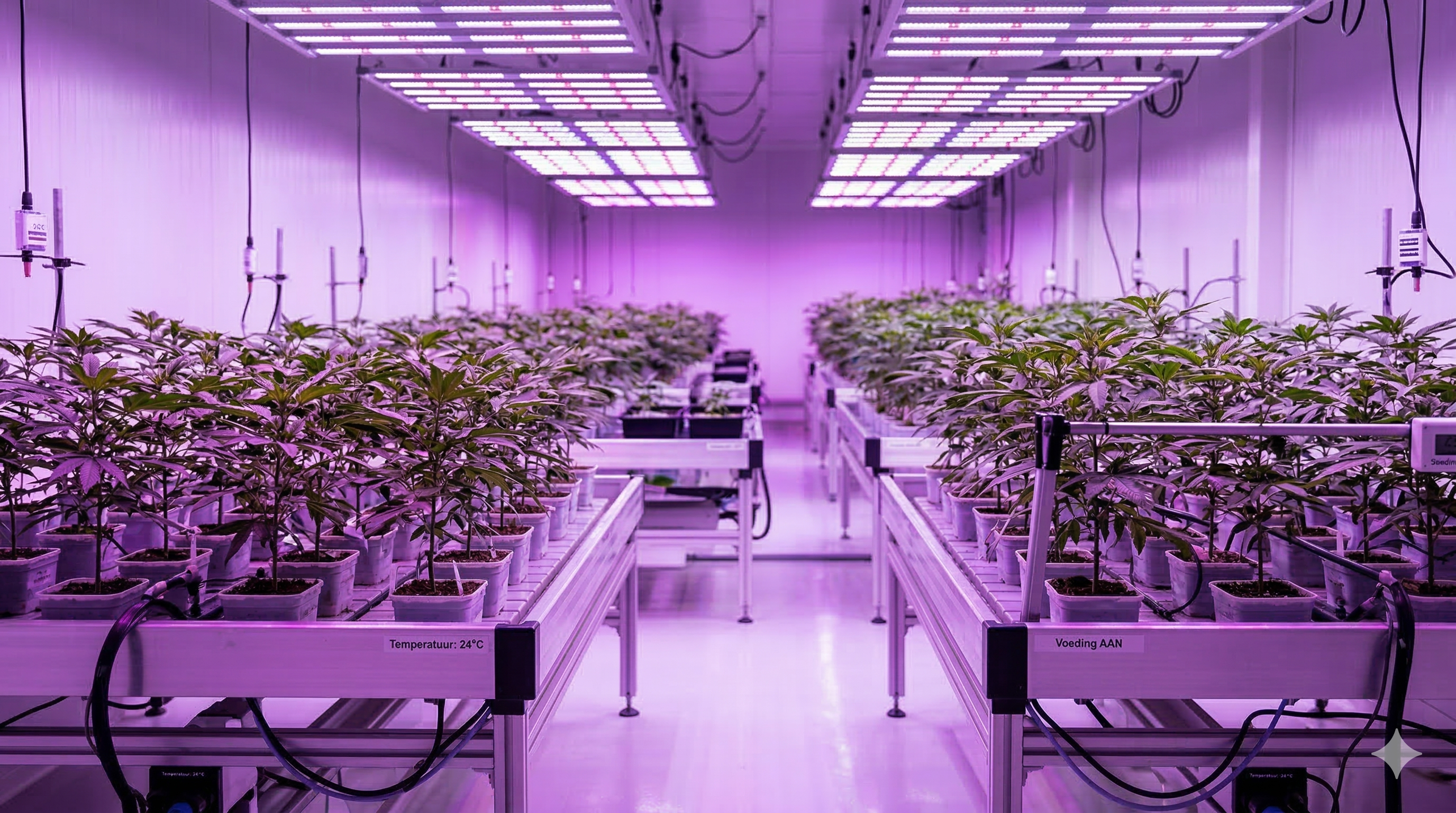
Cultivation must be done by club members themselves. The clubs cannot outsource growing to commercial operations. All cannabis must be tested and tracked, and clubs must maintain detailed records of production and distribution.
What Germany Does Not Have (Yet)
Despite the progress, Germany's model has clear limitations compared to the Netherlands or North America. There are no commercial dispensaries, no retail stores, and no coffeeshop-style establishments. You cannot walk into a shop and buy cannabis as a tourist or casual visitor. The system is designed for residents who commit to a club membership.
Germany has discussed launching pilot programs for commercial cannabis sales, and the ICBC Berlin 2026 conference (April 13-15) is expected to be a major venue for those discussions. Industry observers expect regulated commercial models to be tested by the end of 2026 or early 2027, but nothing has been formally announced.
Medical cannabis, on the other hand, is widely available. Germany imported over 201 tonnes of medical cannabis in 2025, making it by far the largest medical cannabis market in Europe. Patients can obtain prescriptions from private doctors and purchase from pharmacies.
Why This Matters for the Rest of Europe
Germany's club model is being watched closely because it offers a middle ground between full commercial legalization and continued prohibition. Malta pioneered the concept in 2021, Luxembourg allowed home growing in 2023, and the Czech Republic legalized personal possession and cultivation on January 1, 2026.
Slovenia is considered the next likely country to legalize, after voters approved a non-binding adult-use referendum last year. Switzerland is testing pilot sales programs in several cities. And the Netherlands, of course, continues its own Controlled Cannabis Supply Chain Experiment across 10 municipalities.
For the Dutch market specifically, Germany's growth is significant. With nearly 400 clubs now approved and growing, the German cannabis community is becoming self-sufficient for the first time. This could reduce cross-border cannabis tourism to the Netherlands from German visitors, while simultaneously creating a new model that other EU countries may adopt.
What This Means for You
If you are visiting or living in Germany, joining a cannabis social club is currently the only legal way to access recreational cannabis without growing it yourself. The medical route through pharmacies remains the most accessible option for immediate access.
If you are in the Netherlands, the coffeeshop system remains the simplest way to buy cannabis. Over 500 coffeeshops across 106 cities welcome visitors, and you can find all of them on cannabizzz. For the latest news on cannabis policy across Europe and the Netherlands, stay tuned to our news section.