South Africa is one of only a handful of countries in the world that have fully legalized adult-use cannabis at the national level. After a landmark Constitutional Court ruling in 2018 struck down the country's cannabis prohibition as it applied to private use, lawmakers spent years drafting legislation to reflect that decision. In 2024, South Africa officially approved a national adult-use legalization measure, joining the likes of Canada, Uruguay, Germany, Malta, and Luxembourg.
Now the South African government is turning its attention to the next challenge: building a regulated commercial cannabis industry from the ground up.
Draft Rules for Personal Use
South Africa's Ministry of Justice and Constitutional Development recently published a draft regulatory proposal that would set official limits for adult-use cannabis cultivation and possession. Under the proposed rules, adults would be allowed to grow up to five cannabis plants at a private residence, regardless of size or strain. Personal possession would be capped at 750 grams per day, whether in a private or public place, and adults could transport the same amount, including cannabis still attached to the plant.
While these personal-use regulations have made progress, setting up a framework for commercial cannabis activity has proven far more complex.
Government Pushes for Commercial Regulations
During a recent parliamentary briefing, the Department of Trade, Industry and Competition (dtic), alongside the departments of agriculture and health, outlined progress on two major policy initiatives: the National Cannabis Master Plan and the Hemp and Cannabis Commercialisation Strategy. The government is positioning the cannabis sector as a potential driver of economic growth, job creation, and rural development.
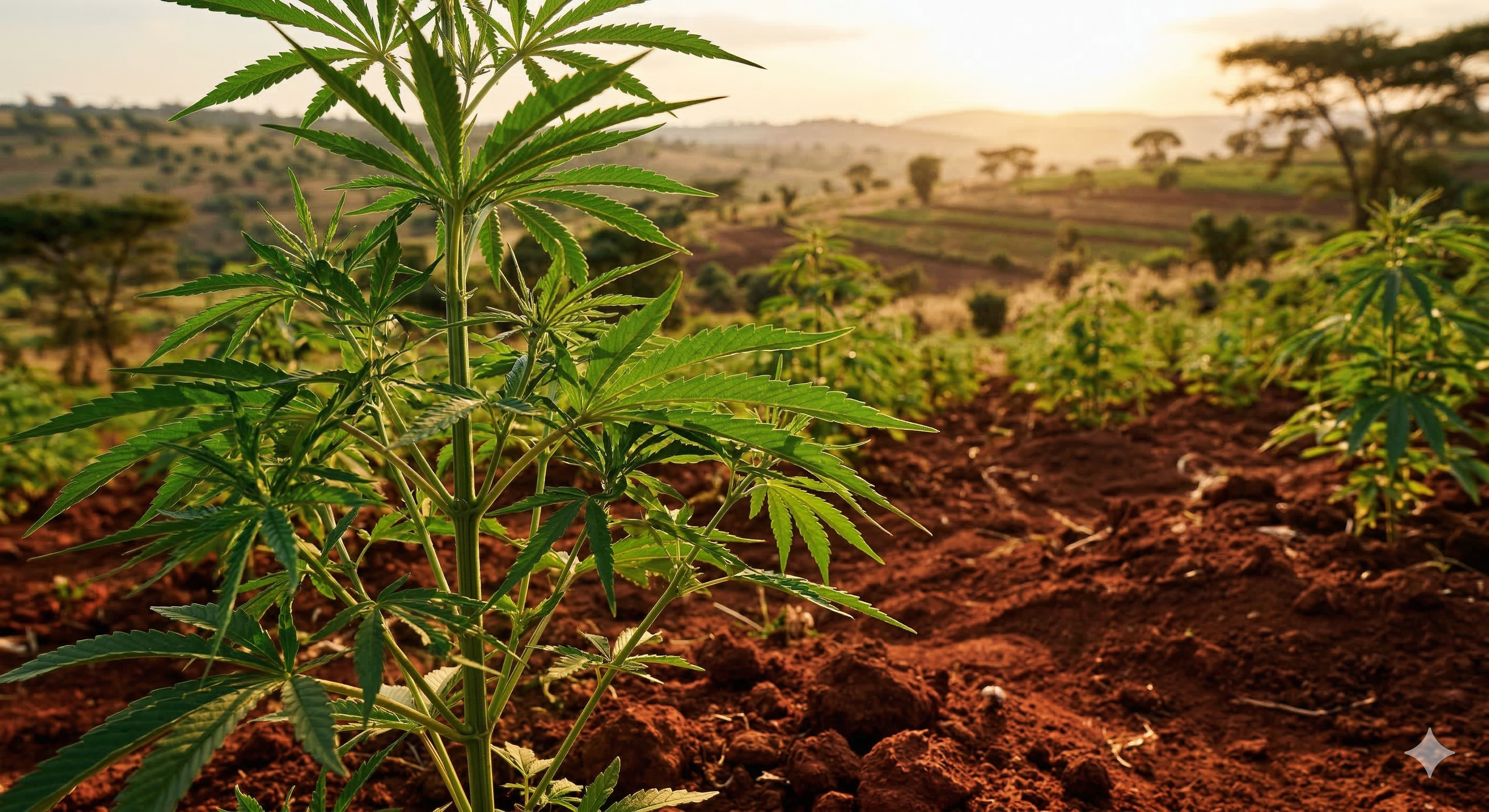
The National Cannabis Master Plan aims to provide a broad framework for the development of the cannabis industry while ensuring inclusive participation. There is a particular focus on rural communities that have historically cultivated the crop, many of which have been marginalized under decades of prohibition.
A $2.5 Billion Hemp Opportunity
A government-backed study recently found that a well-developed domestic industrial hemp market could be worth up to $2.5 billion. The study was commissioned by the Localisation Support Fund (LSF) together with the Presidency, the Industrial Development Corporation (IDC), and the dtic. It outlines a roadmap for turning hemp into a new industrial input across multiple sectors, building on the policy ambitions laid out in South Africa's 2021 National Cannabis Master Plan.
The study identifies five key industrial pathways for hemp development. Food and beverages are highlighted as an accessible starting point, since hemp grain products like oils, flours, and plant-based beverages can integrate into existing oilseed processing systems. Personal care products based on hempseed oil offer low-barrier opportunities for small and medium enterprises. Pulp and paper applications could absorb hemp biomass into biodegradable packaging. Longer-term opportunities include textiles and building materials like hempcrete.
However, the study also makes clear that significant hurdles remain. Industrial hemp is still entangled with broader cannabis legislation, and the report recommends that hemp be explicitly separated from drug laws and regulated under its own industrial framework. Without regulatory clarity, companies face uncertainty around licensing, compliance, and product development.
Building the Supply Chain
South Africa has already started building a cultivation base. Since 2022, the government has issued over 1,700 hemp cultivation permits covering roughly 29,000 hectares across Gauteng, KwaZulu-Natal, and the Eastern Cape. But the study warns that farm economics remain highly dependent on access to processing facilities. Large-scale decortication plants, which separate hemp stalks into fiber and hurd, are described as the missing link between farms and manufacturers.
To address this, the report recommends a cluster-based development model that links farms, processing plants, and manufacturing hubs in specific regions. A blended-finance vehicle is also proposed to support early infrastructure investment and attract private capital.
Global Context
South Africa's move comes at a time when cannabis legalization is gaining momentum around the world. In Europe, Germany legalized adult-use cannabis in 2024, and Czechia has since followed with its own national framework. Several other countries are exploring regulatory models for both recreational cannabis and industrial hemp.
For South Africa, the stakes are particularly high. The country has a long history of cannabis cultivation, a favorable climate, and a large population that could benefit from job creation in the sector. If the government succeeds in building a well-regulated industry, South Africa could become one of the most important cannabis markets on the African continent.
Stay up to date with the latest cannabis news from around the world on cannabizzz.nl.